What is Lexora?
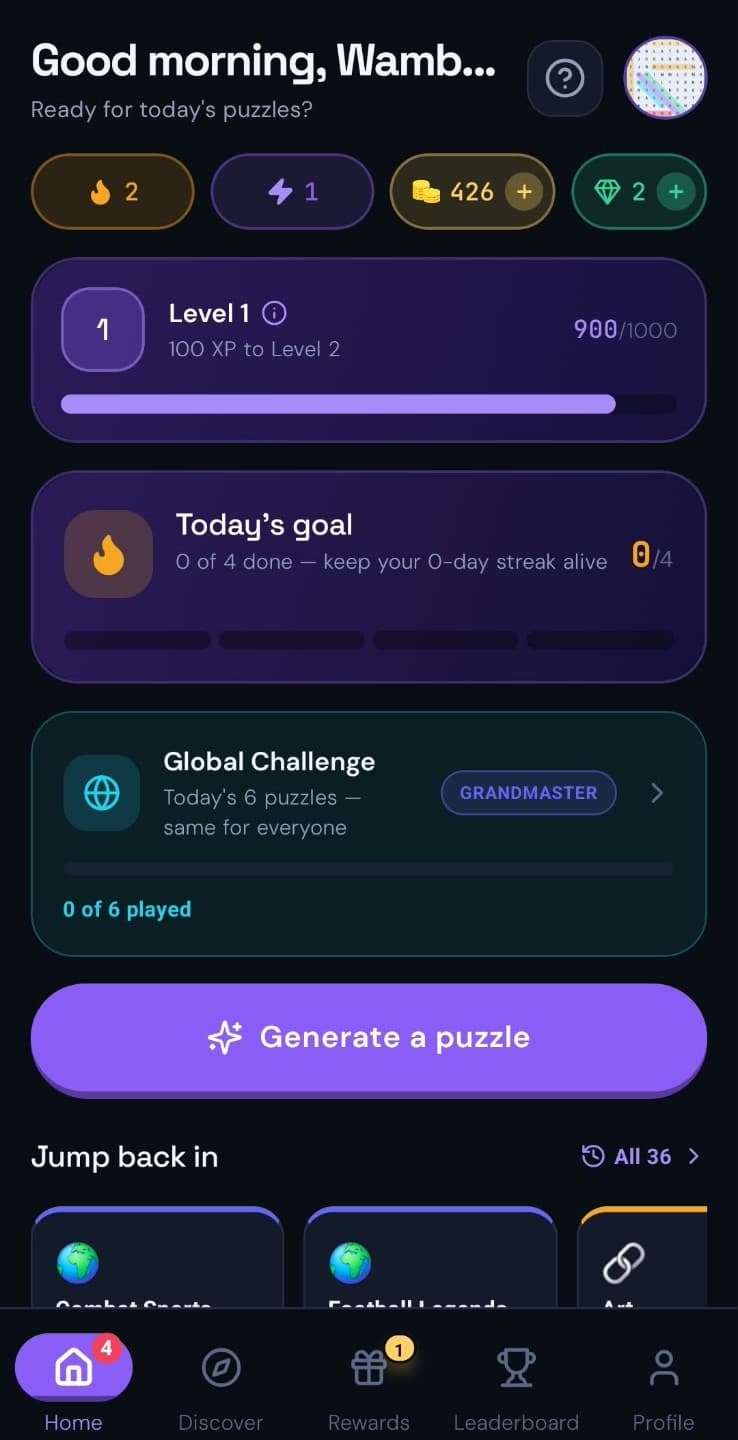
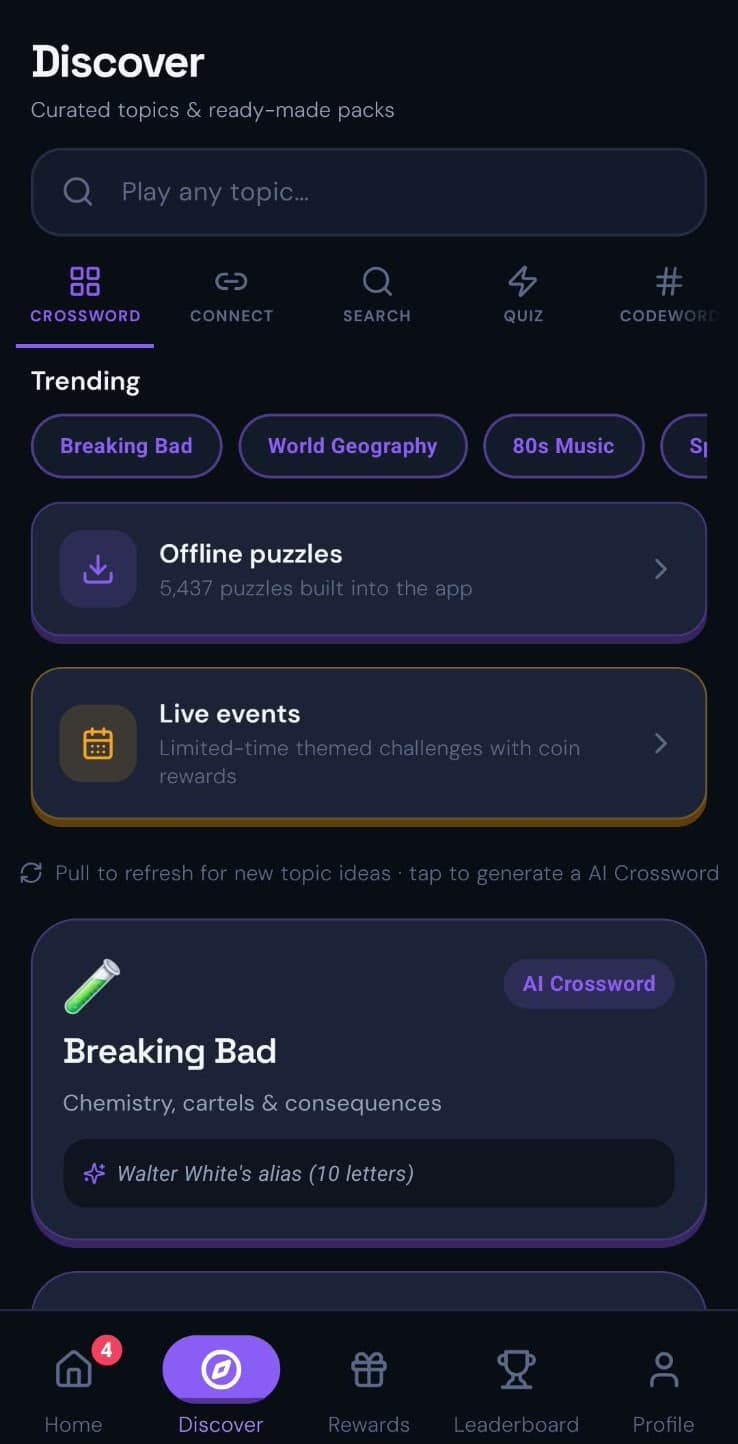
Lexora is a free Android app that turns any topic you type into a playable puzzle. An AI builds the grid, clues, and questions on demand, so a crossword about Ancient Egypt, Formula 1, or your job takes a few seconds to generate rather than being picked from a fixed library.
How many puzzle types does Lexora have?
Eight: Crossword, Word Connect, Word Search, Quiz, Codeword, Rebus, Language Match, and Jumble. Six are generated live from any topic you type, so the same subject can be played six ways; Rebus and Jumble come from a hand-curated library you can play offline.
Do I need an account to play?
No. You can play as a guest immediately. Creating an account is optional and only used to sync progress across devices and appear on leaderboards.
Does Lexora work offline?
Yes. You can pre-download puzzles and play with no connection. Scores, streaks, and coins sync automatically the next time you are online.
Is Lexora free?
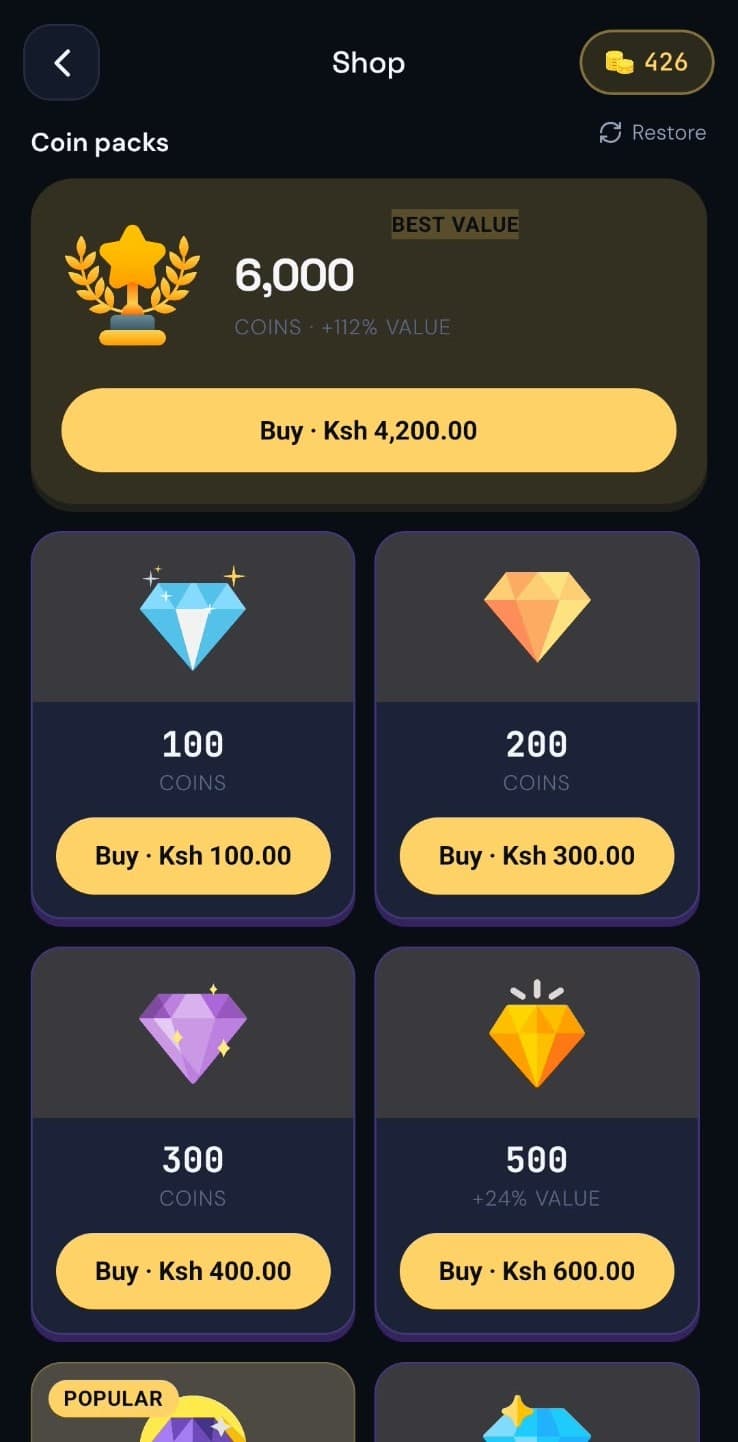
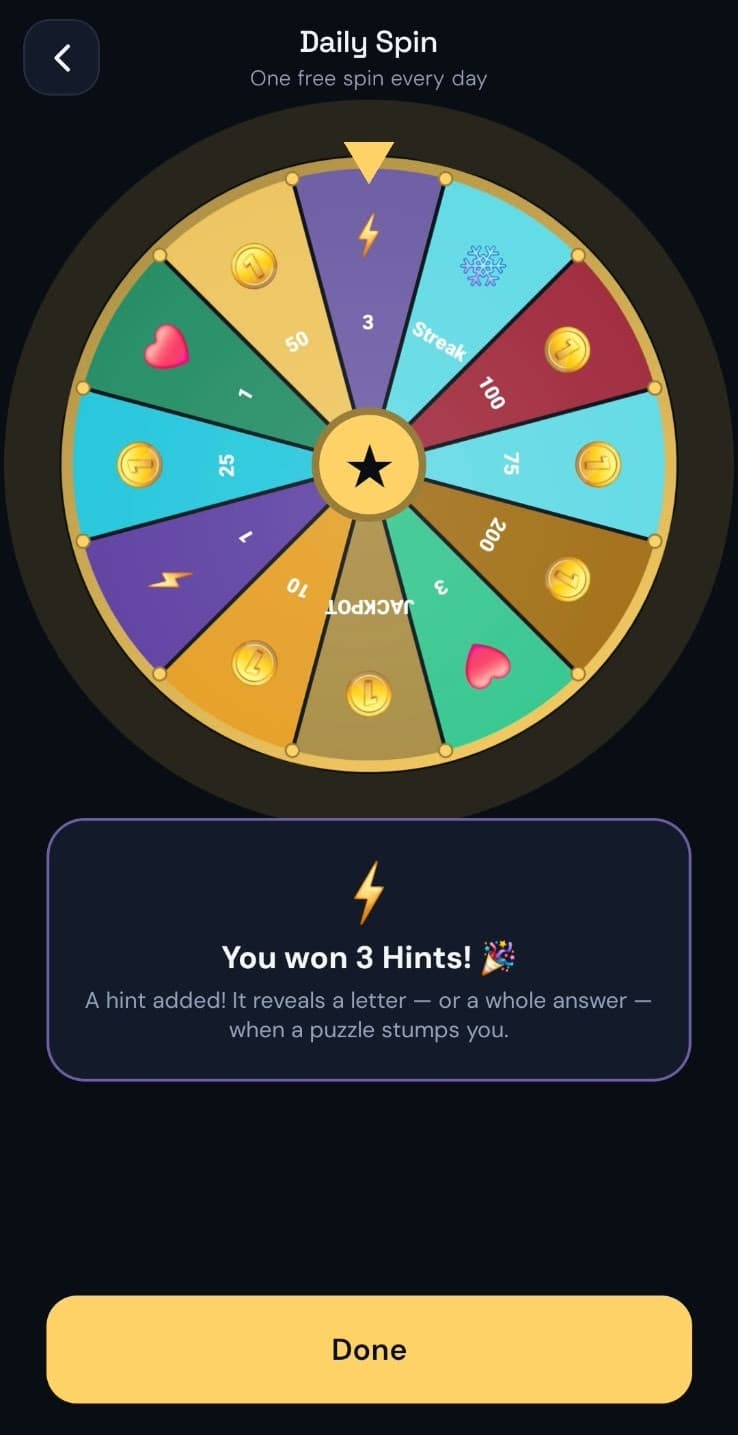
Yes, Lexora is free to download and play, and every player gets 2 AI-generated puzzles a day at no cost. Beyond that you can earn unlimited coins by watching optional rewarded ads — there's no daily cap — plus coins from finishing puzzles, the daily spin, and streaks. In-app purchases are optional and never required to complete a puzzle.
How many coins do you get for watching an ad in Lexora?
10 coins per completed rewarded video, with no daily limit — you can watch as many as you like. Two ads (20 coins) generate an extra word puzzle and four ads (40 coins) generate an extra quiz. Rewarded ads are always opt-in: you tap a button to watch one.
How many coins does a new puzzle cost?
20 coins for an extra word puzzle and 40 coins for a quiz. A quiz costs more because Lexora searches live sources for recent topics before writing the questions. Hints cost 75 coins and a Streak Freeze costs 100.
Does Lexora have intrusive ads?
No. Rewarded video ads are opt-in, and banner ads are kept outside the play area so they never cover a puzzle. There is no interstitial ad after every round, and Gold removes advertising entirely.
What does Lexora Gold include?
Gold raises your daily limit to 50 AI generations, removes all ads, and routes your puzzles through our highest-quality AI model for sharper clues and better quizzes. It's available weekly, monthly, yearly or as a one-time lifetime unlock, and a family plan can share it.
Do Lexora coins expire?
No. Coins never expire and your balance is never reset. It's stored on our servers, so it survives reinstalls and moving to a new device.
Which languages does Lexora support?
The app interface is localized into 10 languages, including English, Chinese, Hindi, Spanish, French, and Arabic. The Language Match mode teaches verified vocabulary across 9 of them.
How does Lexora generate a puzzle from a topic?
Your topic is sent to our servers, where an AI model writes the answers and clues, then a solver fits them into a valid grid before the puzzle reaches your device. Grids that fail validation are rebuilt, so you never receive an unsolvable board.
What is a rebus puzzle?
A rebus spells a word or phrase using pictures, letters, symbols and their arrangement on the page, read by sound rather than meaning. A picture of a bee next to the letter N spells BEEN, and the word STAND printed above the word I reads UNDERSTAND.
What is a codeword puzzle, and how do you solve one?
A codeword is a crossword grid with no clues, where every letter has been replaced by a number from 1 to 26. You start with two or three given letters, then use letter frequency — the most common number is usually E, T or A — plus patterns like one-letter words and doubled letters to crack the rest.
Do word games actually help your brain?
They exercise specific skills — verbal fluency, working memory, visual scanning and pattern recognition — and long-running studies associate regular puzzle-solving with better cognitive ageing. The consistent finding is that variety and novelty matter more than repetition, so rotating between puzzle types does more than grinding the same one daily. Word games are one input among diet, exercise and sleep, not a substitute for them.
Are word searches good for your brain?
Word searches train visual scanning and pattern recognition specifically, which is genuinely useful but narrower than a crossword's vocabulary and reasoning demands. That is a reason to mix modes rather than to skip them.
How do you unscramble a word quickly?
Separate the vowels from the consonants, then look for familiar chunks instead of whole words — endings like -ING, -ED and -TION, and pairs like TH, CH and QU. Recognising two-letter units is far faster than mentally permuting every letter.
What is a rebus in a crossword?
A rebus square is a single crossword cell holding more than one letter, often an entire word like HEART. It deliberately breaks the one-letter-per-square rule and is usually the theme of that particular puzzle.